
← News
Expo Osaka 2025: multimedia ideas for museums, cities, universities
Trade fairs and events by Marco Scuderi
A journey into innovation
Visiting Expo 2025 in Osaka means stepping into a world where technology, creativity and culture come together to imagine new ways of communicating, teaching and involving people.

Among spectacular pavilions and surprising installations, we gathered ideas that can also inspire Italian public institutions – museums, universities, parks, municipalities – in creating new digital experiences. Here is what struck us most, and how we could turn it into something concrete here in Italy.
USA Pavilion – Telling a story with a mascot, a jingle and large screens
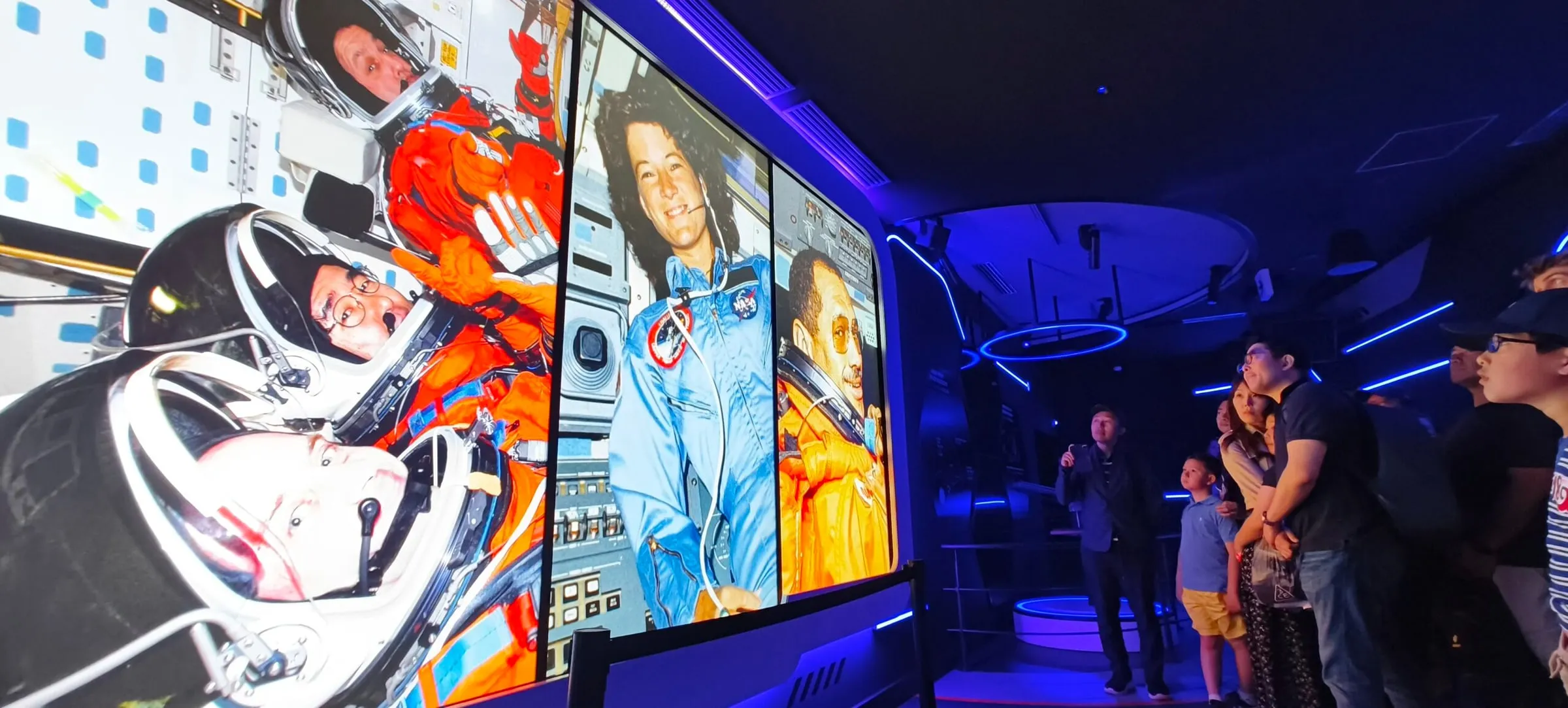
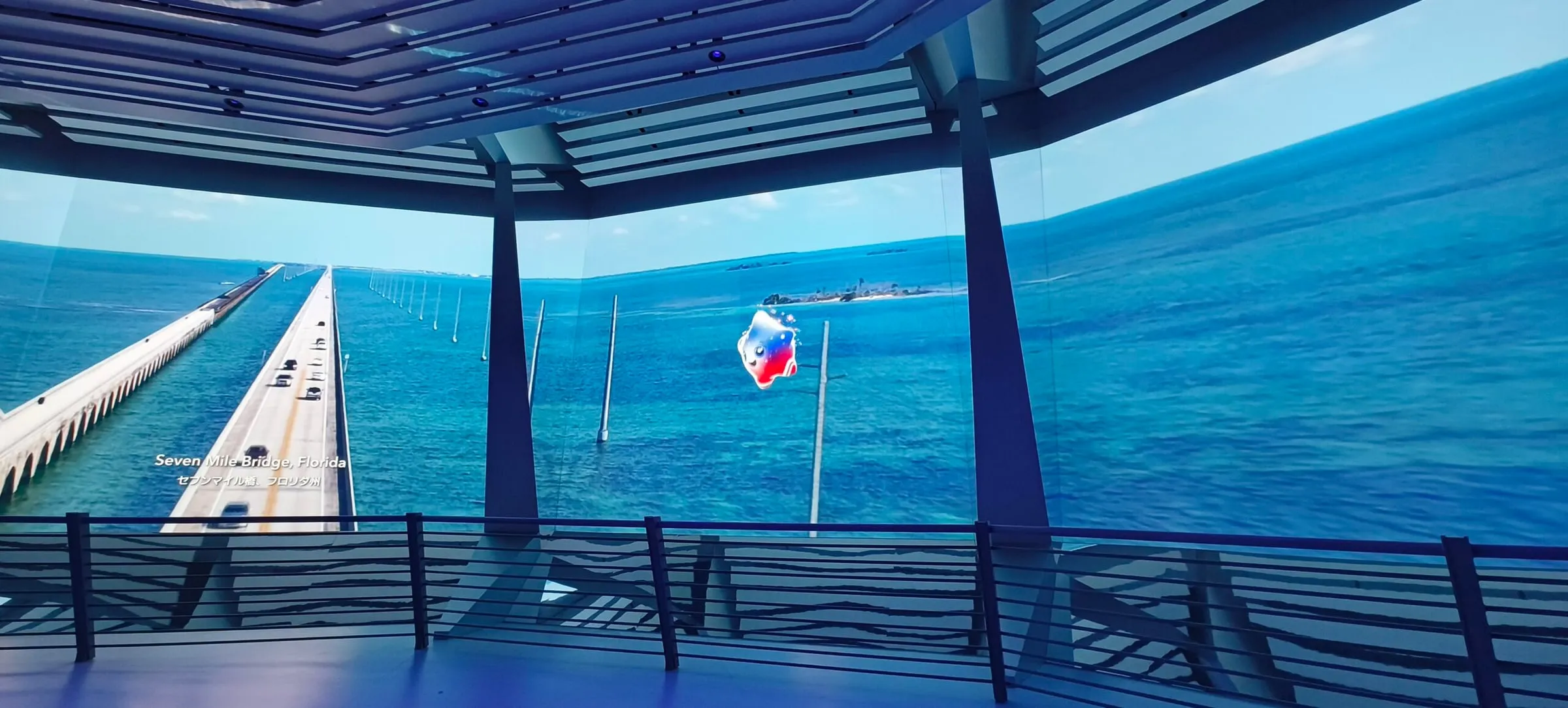
The USA Pavilion took a highly engaging narrative approach. The theme “Imagine What We Can Create Together” unfolds through an animated mascot and an easily recognisable jingle. The mascot guides visitors from room to room, through multi-screen environments that deal with the different aspects of American innovation.
The experience ends in a spectacular room that simulates a spacecraft: a double-height space with vertical screens, a screen (of which we only see a circular portion) on the ceiling and huge mirrors.
Here the mascot takes the visitor through a countdown to the moon. As soon as the craft sets off, we watch the screens as if we were looking out of the windows while we lift off the ground and reach the moon.
The result is striking, thanks to the visual direction and to the way the synchronised scenic and sound elements work together.
Singapore Pavilion – Poetic interaction and immersive media
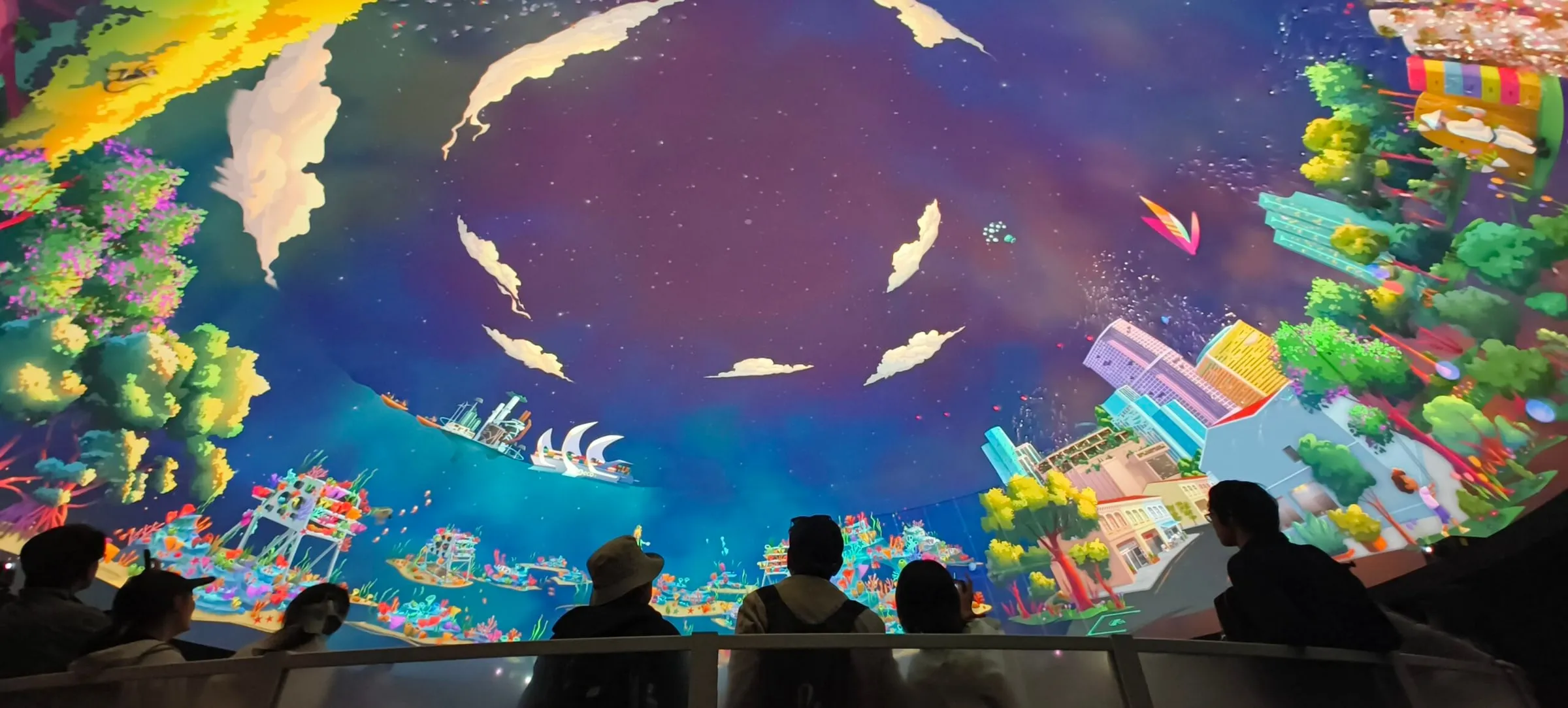
The Singapore Pavilion, titled “The Dream Sphere”, is laid out over three levels and combines art, light and technology to tell the country’s dreams and ambitions.
You enter a room where you find yourself surrounded by natural settings rebuilt in white card and plays of light; along the walls run very well-made 2D stop-motion animated videos; the space recreates the effect of a forest, with white trees where, in place of the foliage, there is a screen, and pressing a button brings new branches to life in the form of 2D animated videos.
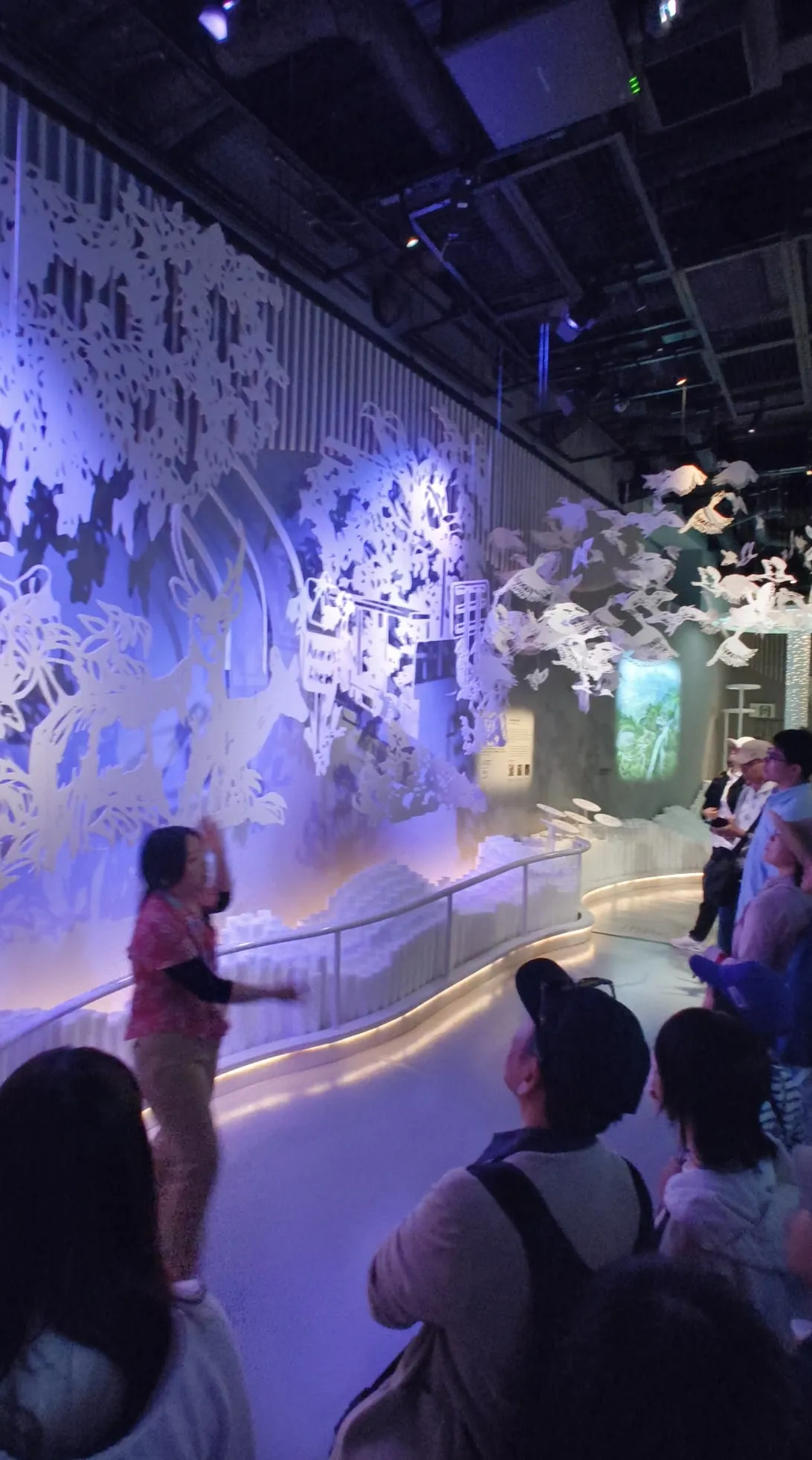
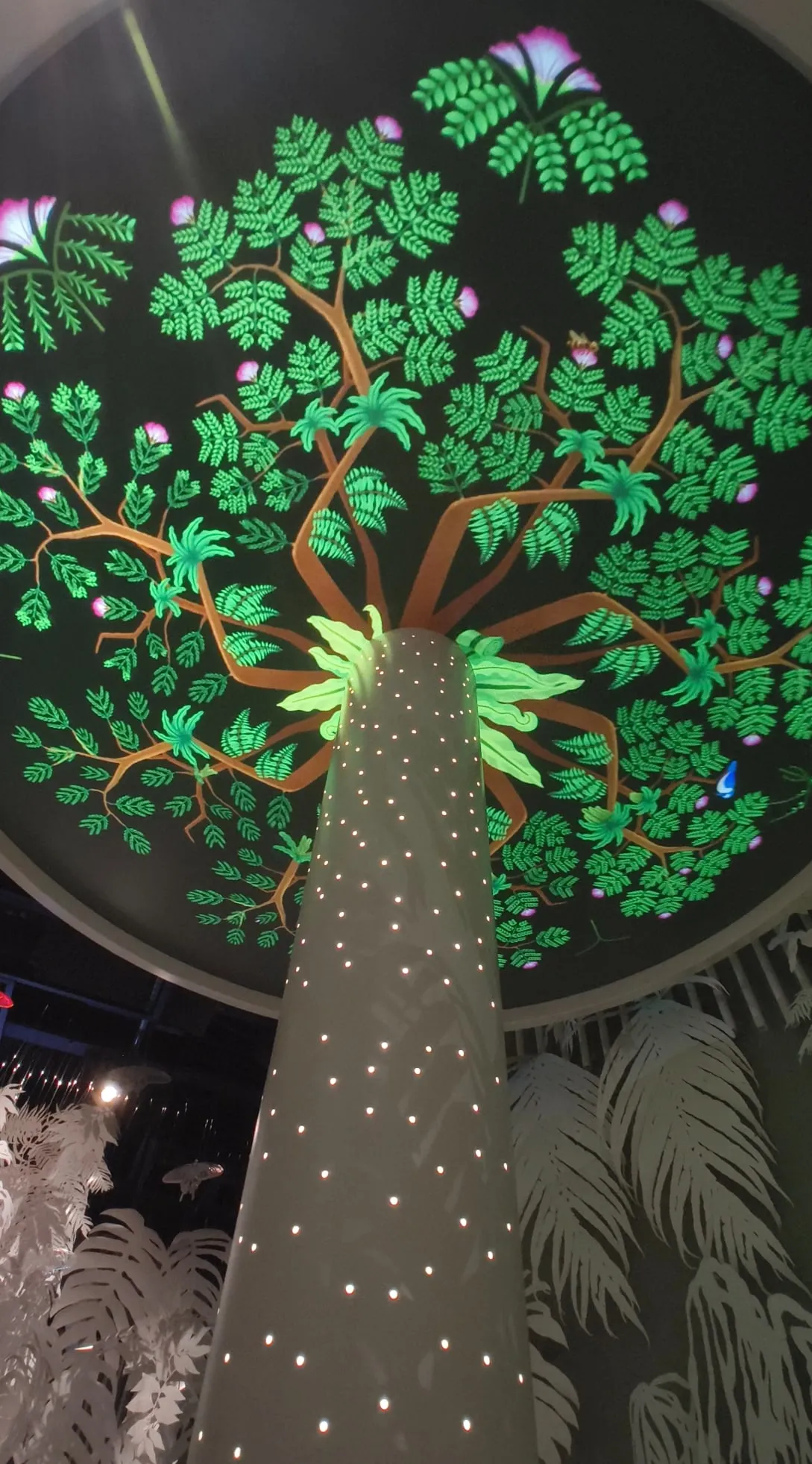
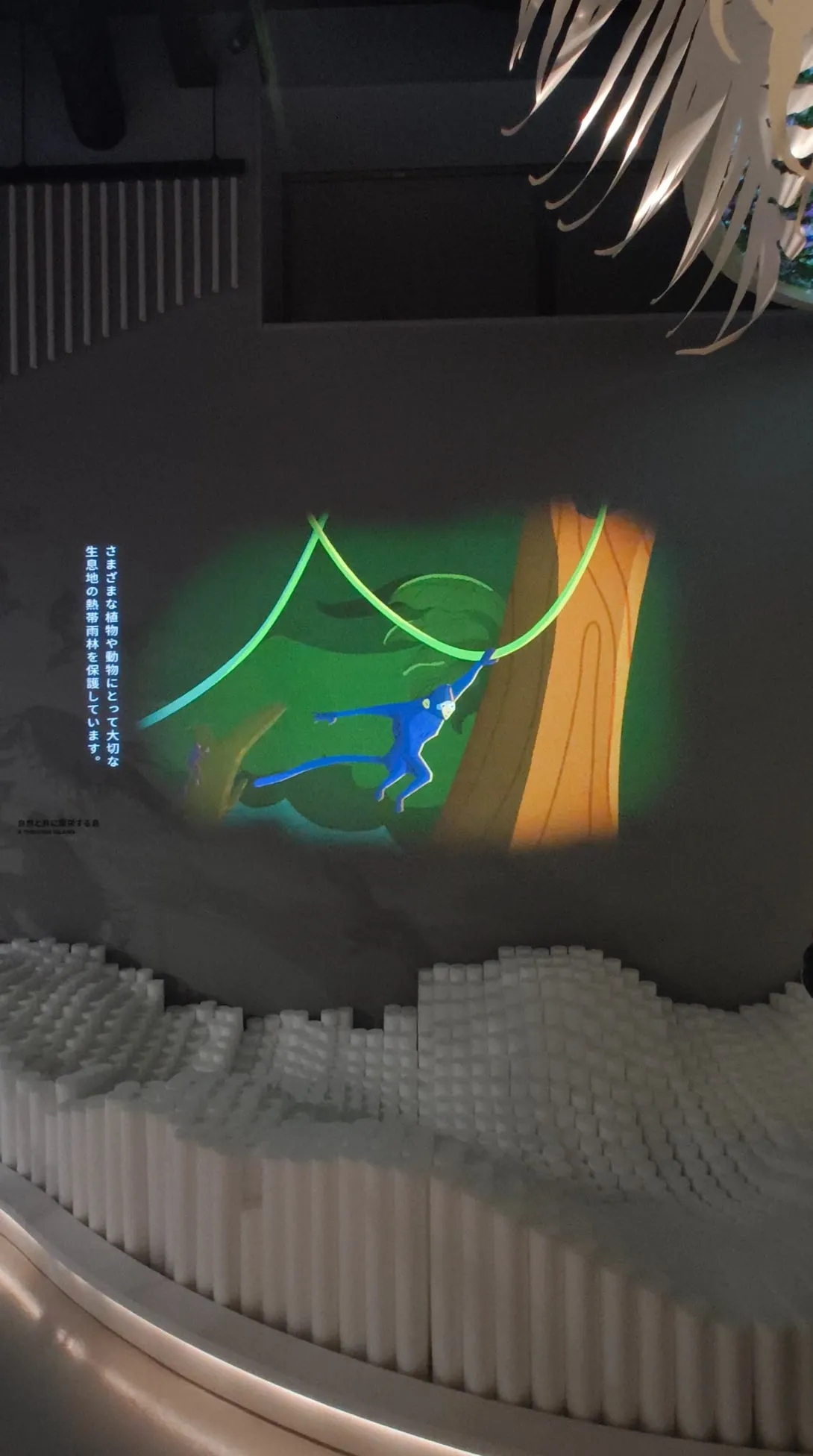
But the most interesting rooms are the ones that follow, not least because of their interactive ideas.
The next room is made up of a series of lamps, arranged in a group that forms a shape recalling a tree. These lights are laid out in a circle, and around them are white lecterns onto which interactive projectors play an application, giving the impression of standing in front of a tablet.
You can then start the experience, draw your own dream on the lectern, enclose it in a sphere and throw the dream towards the tree of lights, which light up accordingly: the interactive effect is very engaging as well as evocative, and it works for everyone, children and adults alike.
From this room you move up to an upper floor where a huge system of projectors plays a 2D animated video on the circular ceiling, showing the birth and construction of a smart city; you are immersed in this great scenic effect with your eyes on the ceiling.
The icing on the cake is that, at a certain point, the dreams expressed in the previous room are played on the ceiling together with the video. The final result is genuinely engaging, and you feel part of the video story taking shape below (or above) your eyes.
Malaysia Pavilion – Games, augmented reality and interactive city models
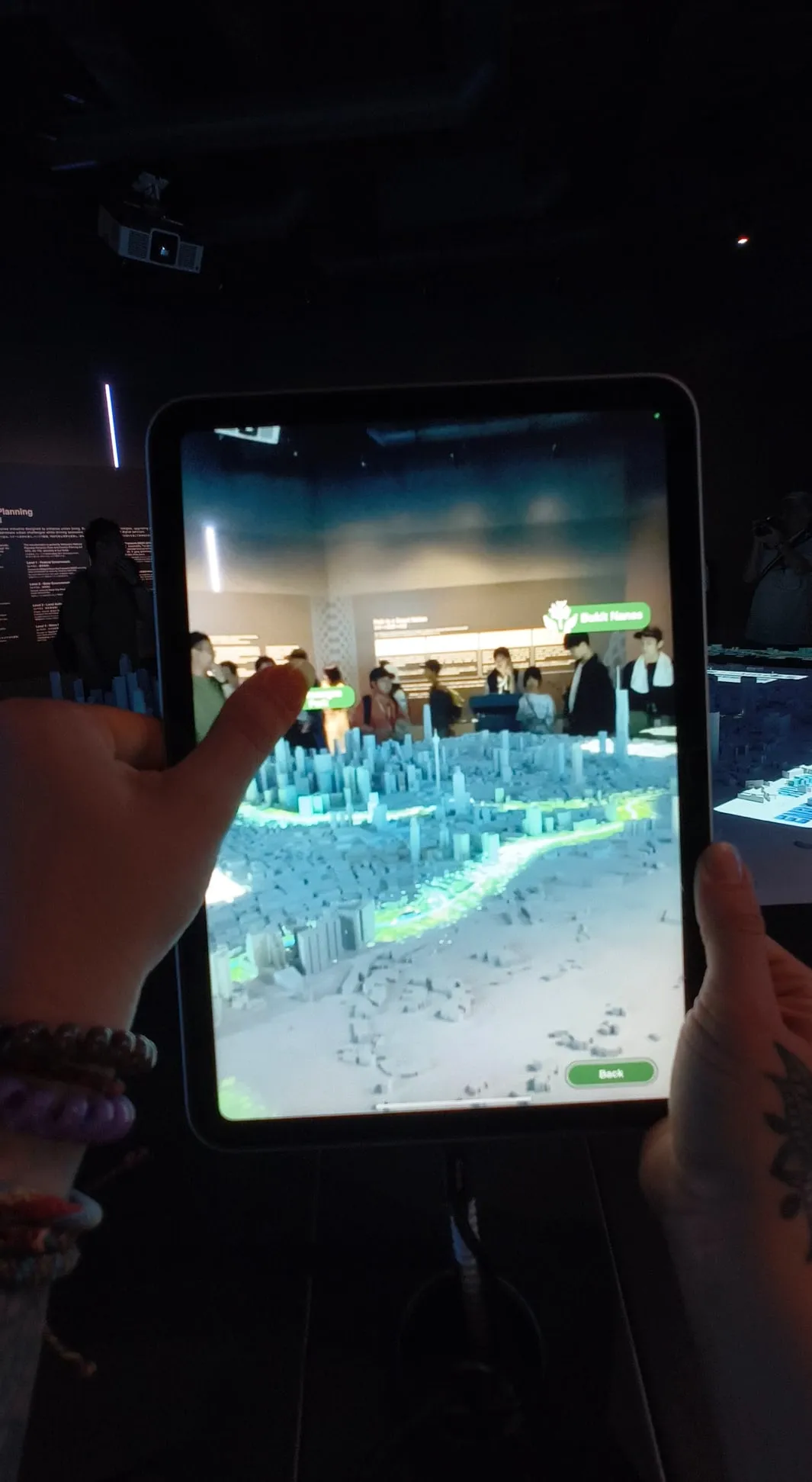
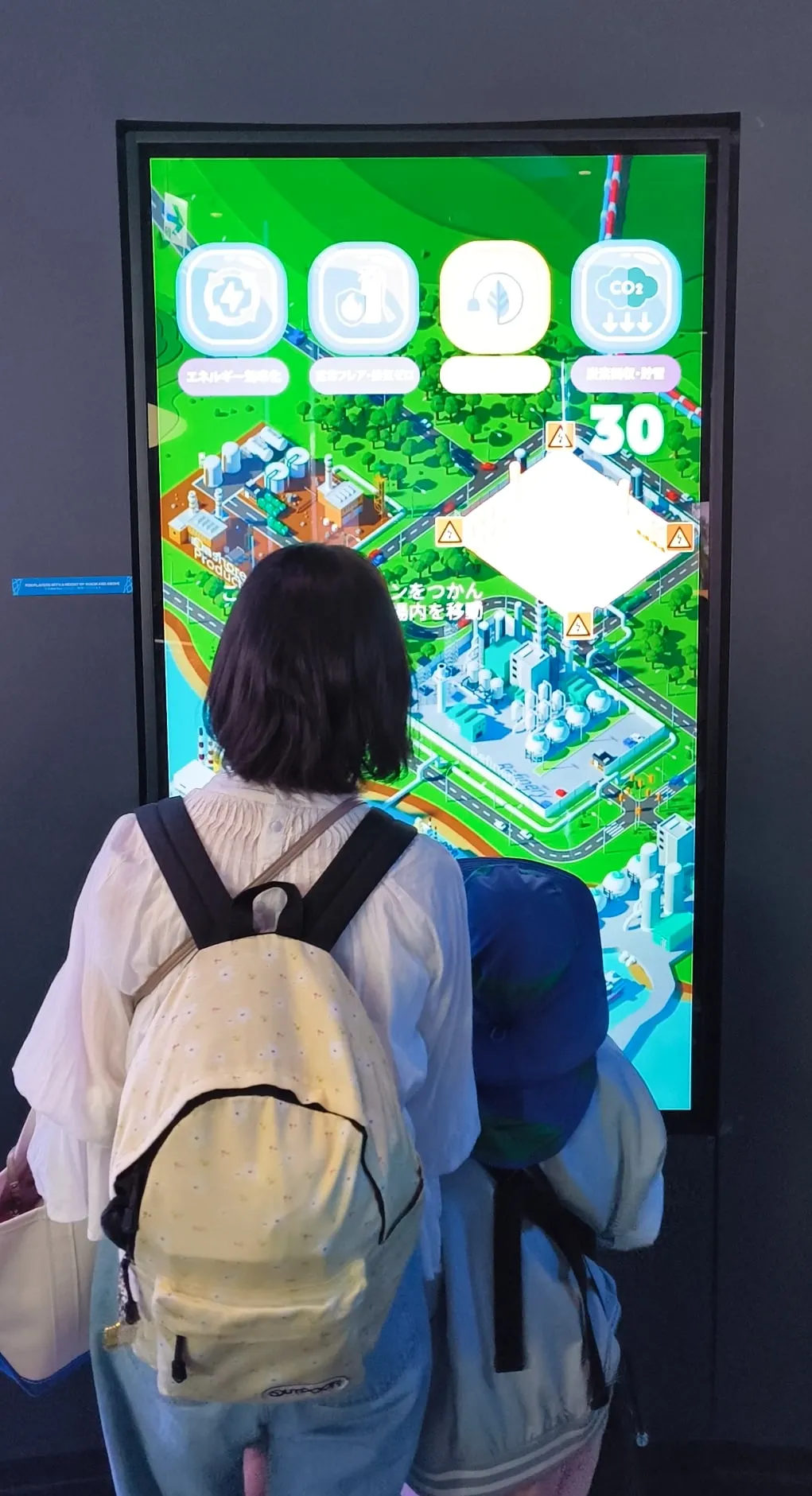
The Malaysia Pavilion offers a narrative route that starts from traditional street food and develops into futuristic urban visions.
There are several interactive screens with interactive games, although they have a few bugs and the buttons are hard for younger visitors to use.
After the first, experiential part, the visitor comes to a 3D scale model of Kuala Lumpur, surrounded by a set of tablets. Through an augmented reality application, you can point the tablet at the model and receive interactive information about the different buildings and areas of the city. The effect is educational and engaging, and it clearly shows how a physical object can be enriched with digital content in context.
Australia Pavilion – Nature, sound and environmental immersion
The Australia Pavilion, with the theme “Chasing the Sun”, is built from recycled and sustainable materials. The first room is a multisensory reconstruction of a eucalyptus forest: scents, sounds and ambient light blend with mirrors that widen the perception of the space. The trees contain hollows with screens installed inside them, showing animals typical of this kind of environment, moving as if they really were there around us, on the trunks of the trees.
The effect is curious and interesting, and the idea of placing screens inside recognisable objects to widen their communicative power works very well.
In another room, a composition of screens spread across walls and ceiling projects marine settings, creating a panoramic, immersive effect. The design brings together sustainability, storytelling and experience design.
Pasona Group Natureverse Pavilion – Multi-screen installations, digital humanism and the future of health
The Natureverse pavilion, created by Pasona Group, presents a holistic vision of the society of the future, based on harmony between human beings, nature and technology. The structure, shaped like an ammonite, hosts guide characters such as Astro Boy and Black Jack. In the opening area, the “History of Life Zone”, a tree-shaped installation traces 3.8 billion years of evolution, with a mirrored base that stands for the cyclical nature of life. The technologies on show include mobile operating theatres, exoskeletons with neural interfaces (Cyberdyne), compact health sensors (Cyvis) and photoacoustic systems (Acoustic X).
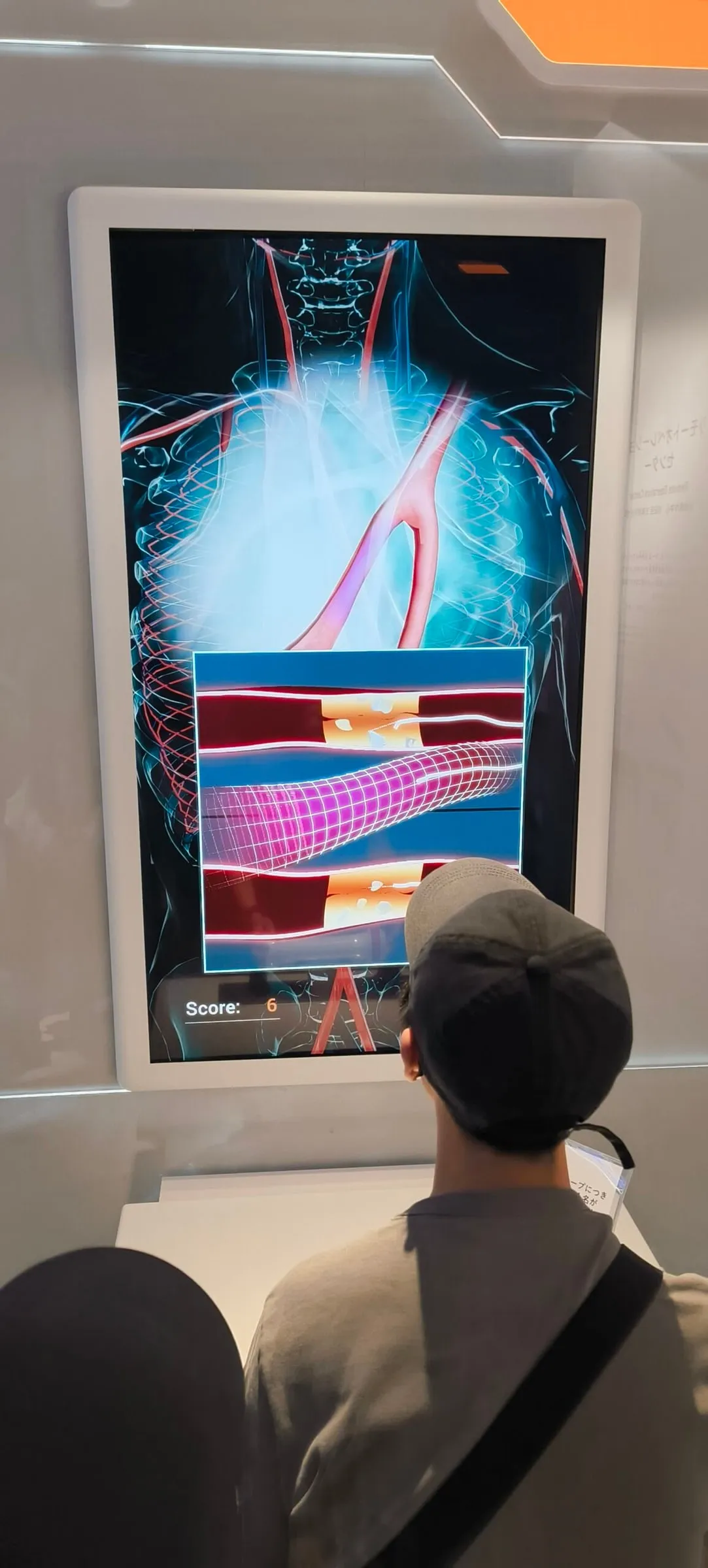
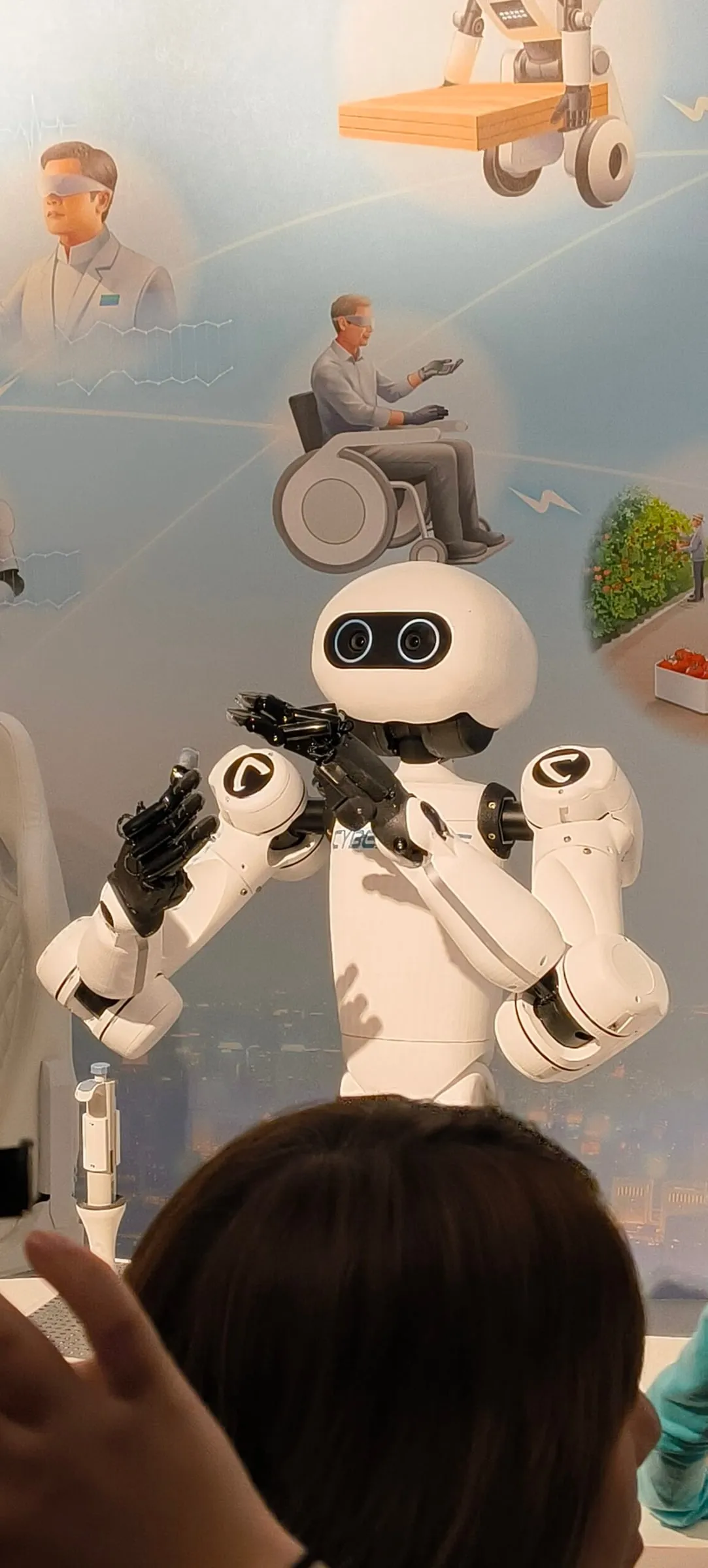
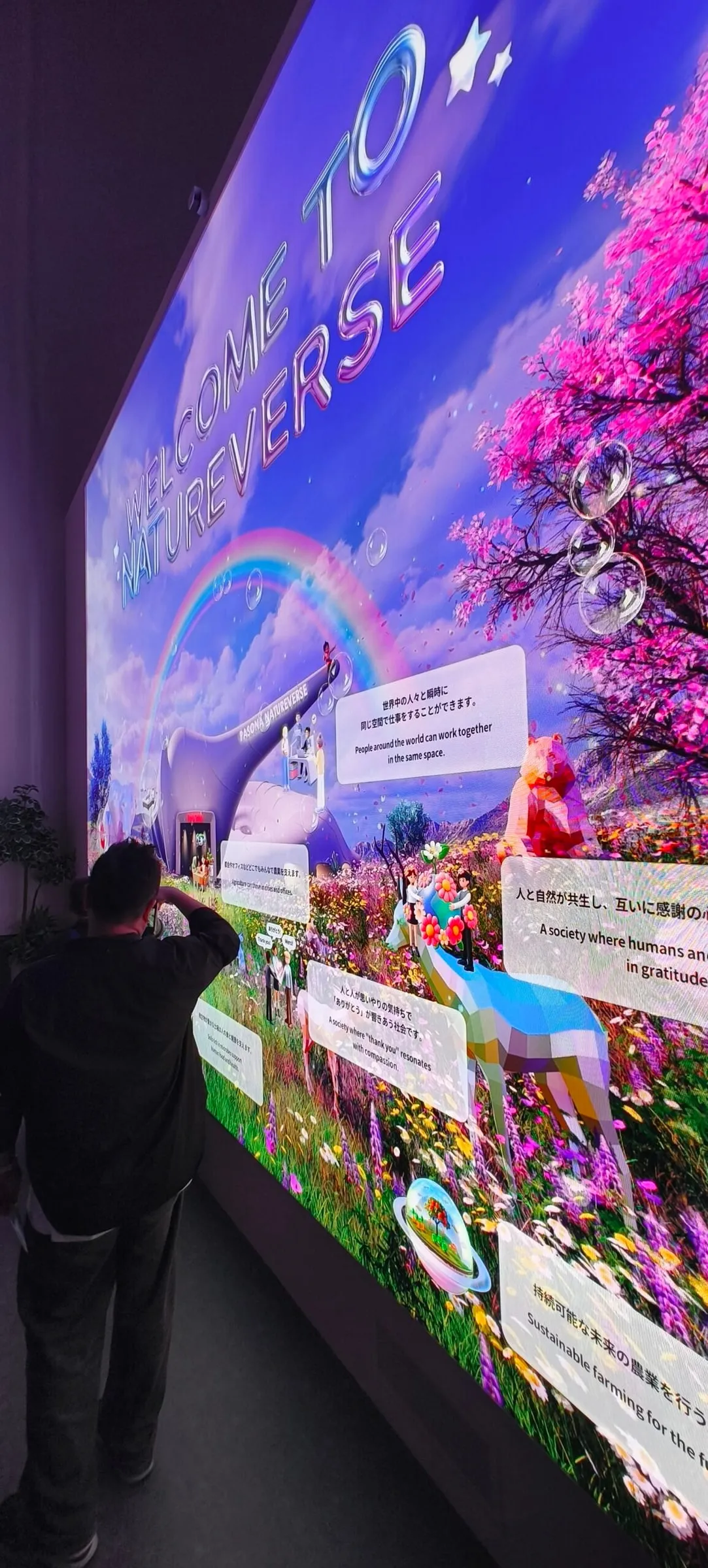
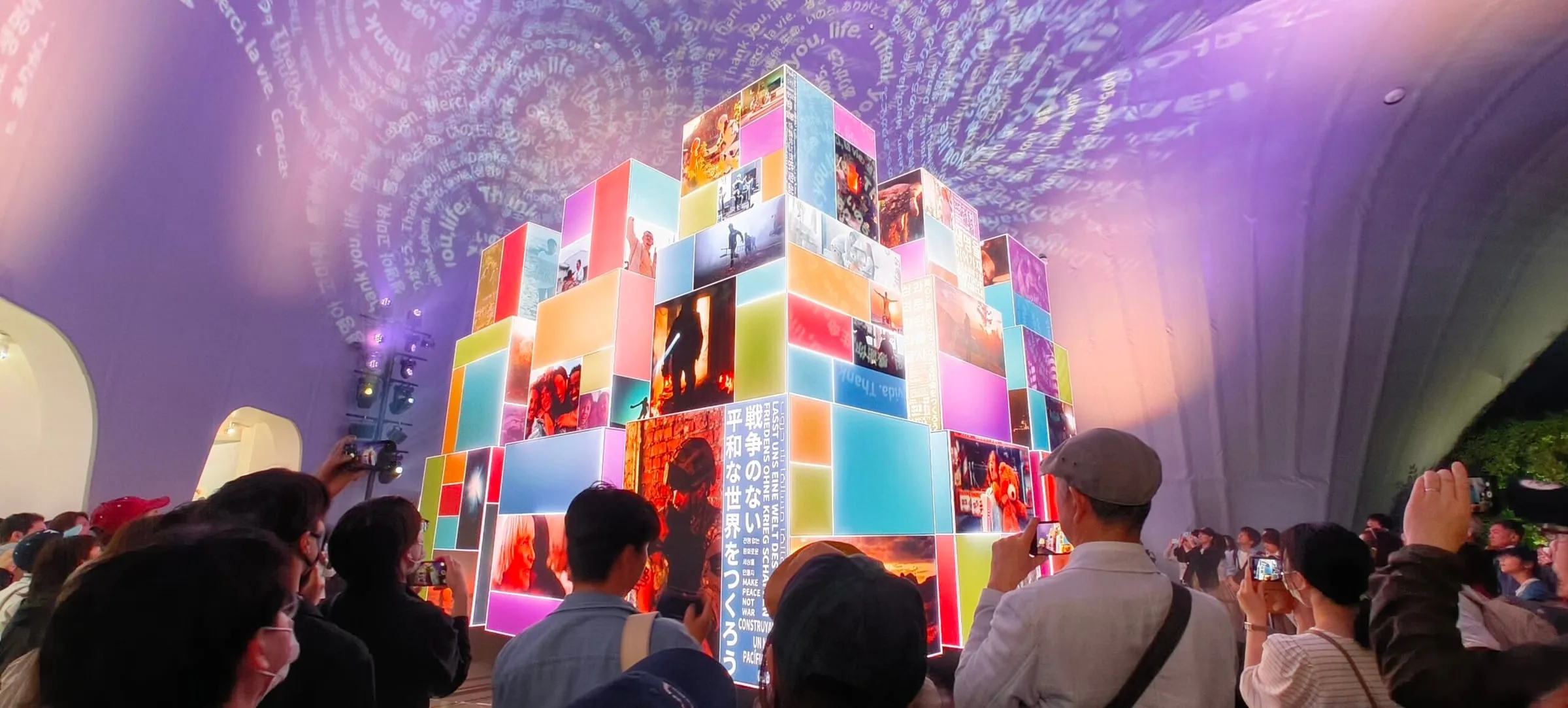
The last room holds a complex system of screens set on moving cubes, which shift in a choreographed way on trolleys and create an original, unusual video composition.
A video is played on these cubes that can therefore be enjoyed from different angles, at 360°, and it certainly has scenic impact: it shows a truly rich world, where nature and technology coexist and people are connected with compassion.
Malta Pavilion – Intelligent use of a large screen
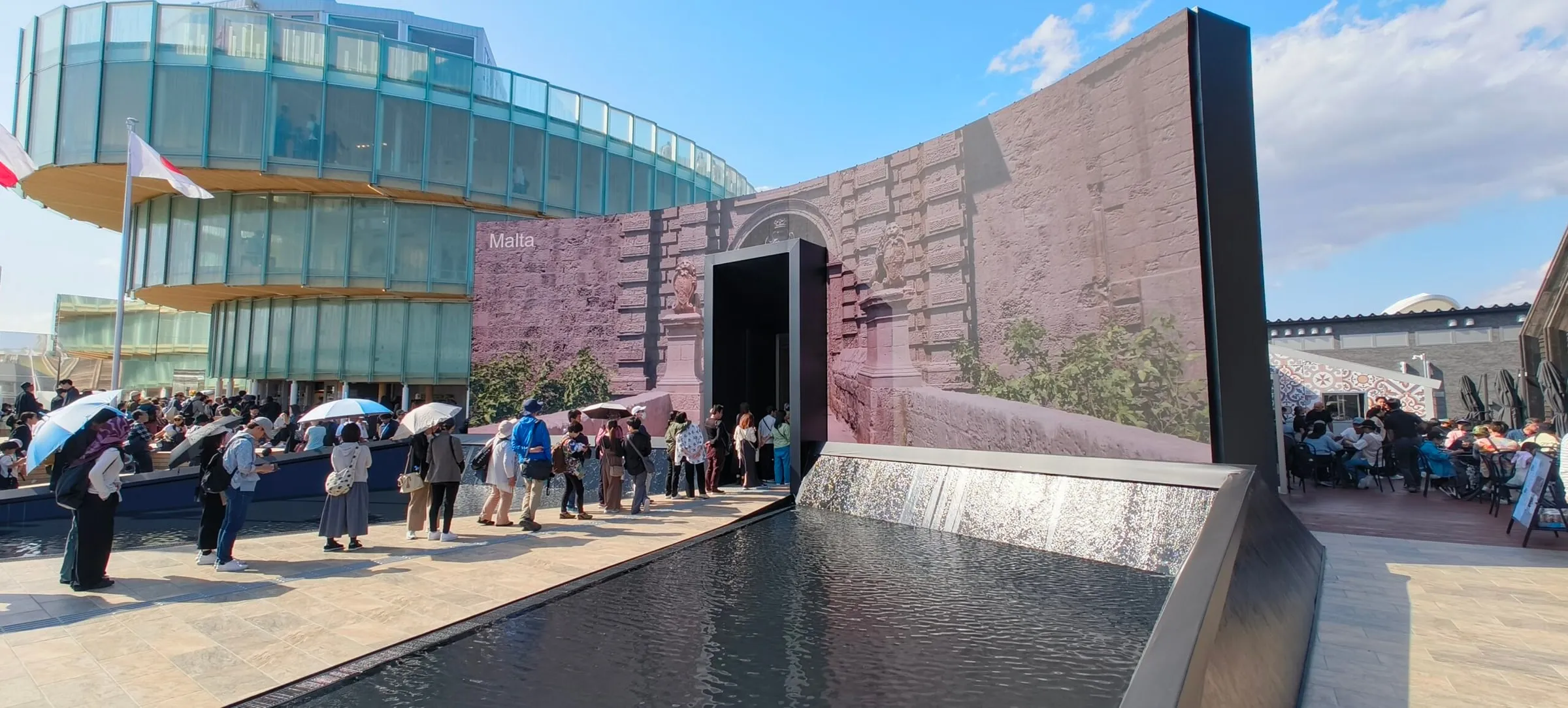
The Malta Pavilion shows how strong visual impact can be achieved even with limited space and budget. The entrance opens onto a walkway above a pool of water, framed by a curved large screen showing Maltese landscapes and tourist views. At the centre of the large screen is the door into the pavilion, and that space always matches a door inside the video.
Several videos run on this screen, but the most evocative is the timelapse of the sun rising and setting over the sea, in time with the reflection in the water. A simple yet extremely effective example of scenic design, one that also works for small institutions or cultural projects with space constraints.
Conclusion
The Expo is not only a display of technological power, but an inexhaustible source of inspiration for anyone who designs public and cultural experiences and is looking to create involvement and new tools for interaction. Did you see something that struck you? Or do you simply want to explore what could be done here in Italy? Let’s talk. We can build it together.