
← News
Touch screens for museums: what they are and how to design them
Culture by Mariarita Persichetti
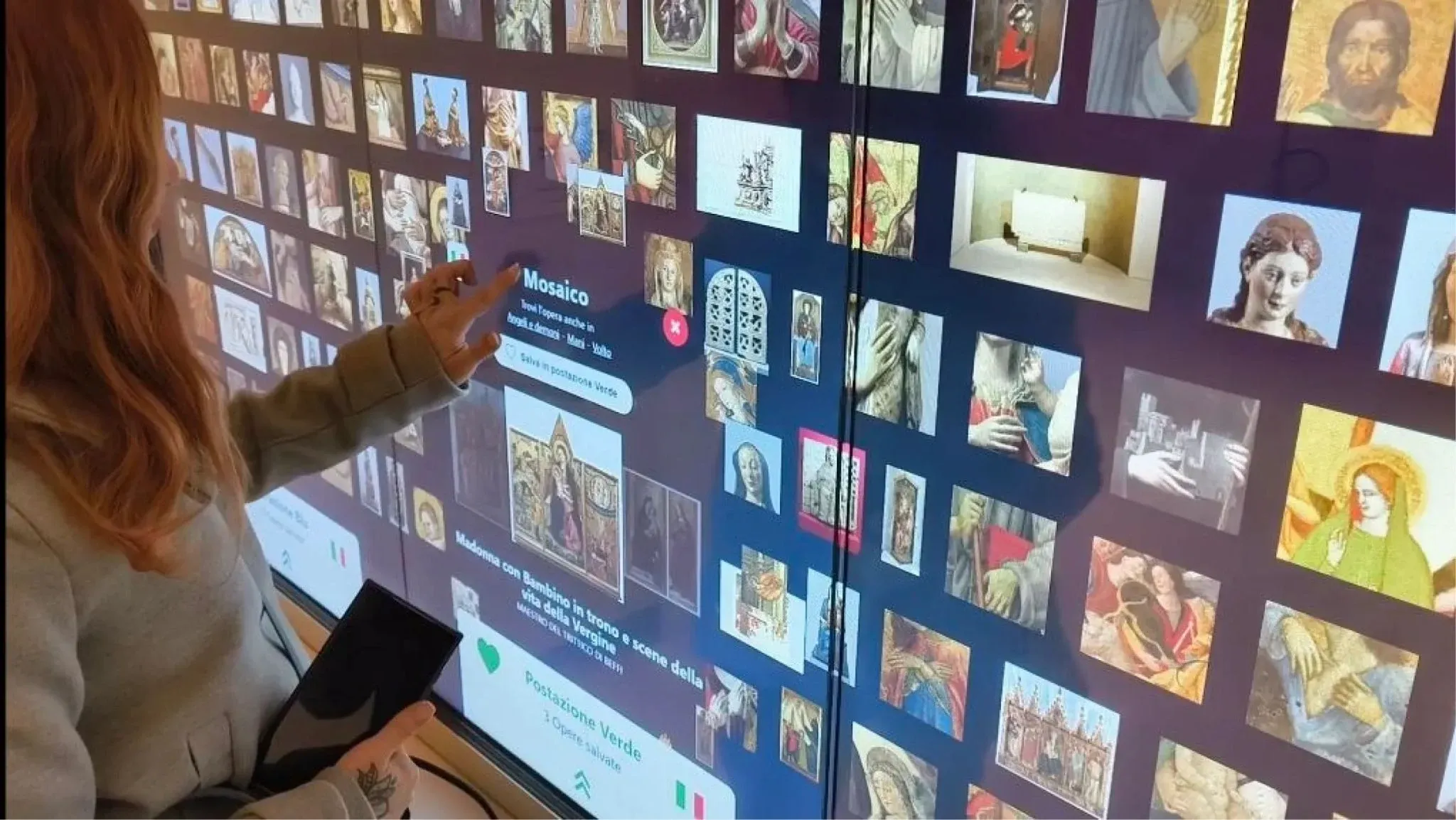
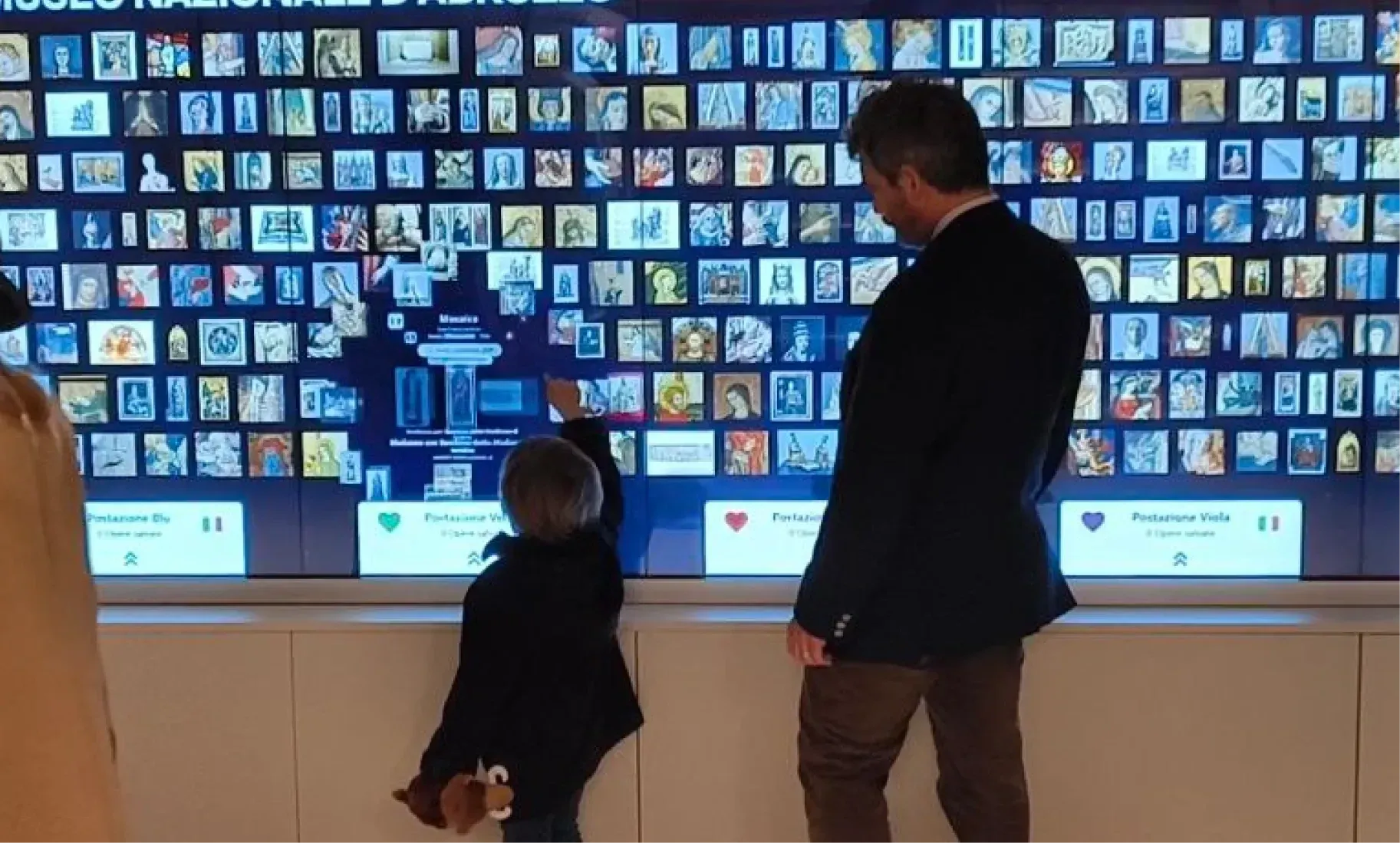
A touch screen for museums is a tool for exploring collections, learning more about the stories behind the artworks and building personalised visit routes. To be truly effective, though, it has to combine user experience design with the quality of its content. The final aim is to make knowledge more accessible and to spark visitors’ curiosity.
“Working closely with the management and staff of MuNDA, we set out to create a tool that makes the connections between the artworks visible, accompanies the visit and leaves each person free to enjoy discovering, exploring and building their own route”, said Marco Scuderi, director of Frame Multimedia Solutions. “Today technology offers immense possibilities, but for us innovating means understanding which of them create real value and genuinely enhance the cultural experience”.
Usability and ease of use: the visitor at the centre
The first requirement of a good museum touch screen is ease of use. Clear interfaces, recognisable icons, short texts and a consistent visual hierarchy help people find their way without instructions.
Navigation must be immediate: few steps to reach the information, buttons that are easy to spot and the option of returning to the home screen without difficulty.
The design must also take into account the variety of the audience. Children, adults, older people, people with disabilities and visitors who do not speak the museum’s language may have different needs. Legible fonts, adequate contrast, content available in several languages and accessible ways of interacting all help to make the experience inclusive. It is also important to consider the height of the screen and how easily users can reach and tap the interactive elements.
Content and interaction: from consultation to discovery
An intuitive device is not enough if the content fails to engage. The content must be able to offer visitors new ways of reading the collections. Technology makes it possible, for example, to observe details that are hard to see in the original works or to reconstruct the historical context of an object.
Quizzes and animations can be useful, especially for younger audiences, as long as they do not become purely “decorative” elements that distract from the cultural content.
The length of the interaction also matters. In a museum, where several people may want to use the same device, it is advisable to design experiences that can be understood in a few minutes, without giving up the option of going deeper.
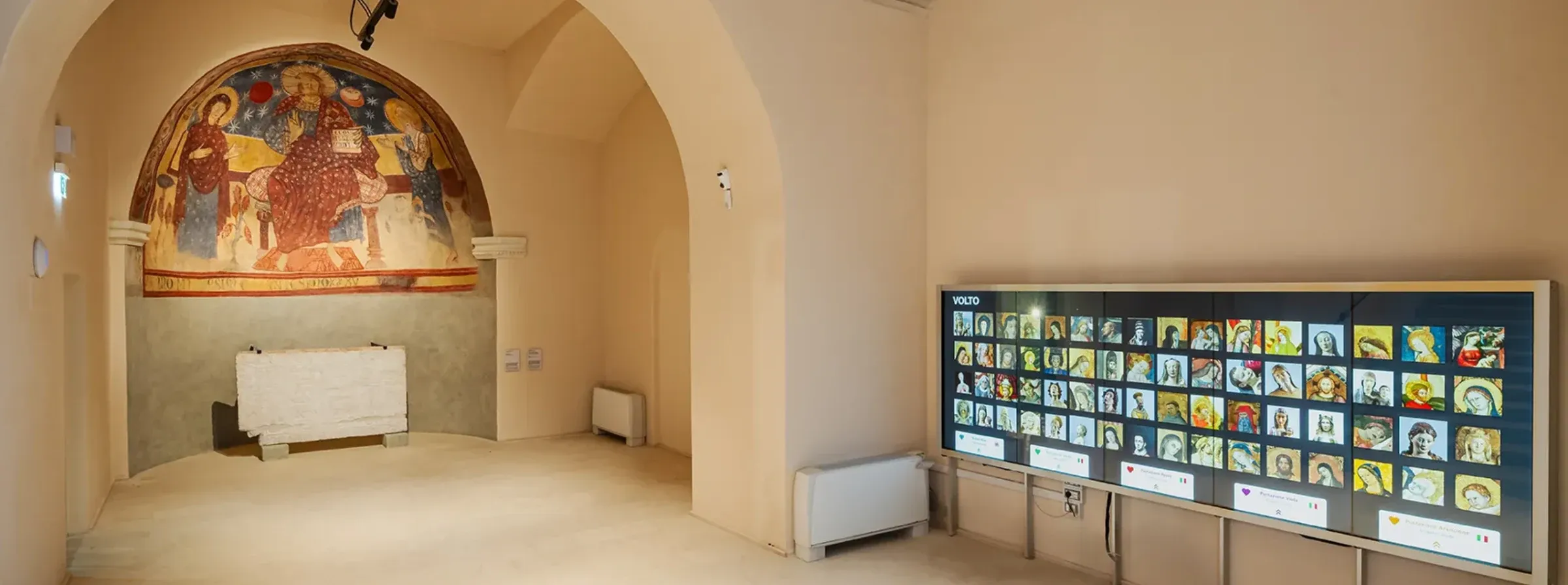
The “Iride” touch wall, an interactive digital installation created by Frame Multimedia Solutions for browsing the artworks of the Museo Nazionale d’Abruzzo, L’Aquila.
Frame MS’s touch wall for the Museo Nazionale d’Abruzzo
One example of a museum touch screen is the one created by Frame Multimedia Solutions (in Italian) for the Museo Nazionale d’Abruzzo (MuNDA) in L’Aquila. The World on Wall© format, placed in a museum setting, can become an access point complementary to the collections, letting visitors explore information and digital content through a shared interface. In short, it is a multimedia system that presents the cultural heritage of an institution (or even of a city) interactively. The value of the touch wall lies in its ability to combine consultation and interaction, adding further tools for knowledge to the physical visit.
Measuring success beyond the novelty effect
A well-designed museum touch screen is not judged only by the quality of the screen or its technical sophistication. What matters most is its ability to help people find their way, understand better what they are looking at and develop a greater interest in the collections. When accessibility, content and interaction work together, technology becomes an integral part of the cultural experience.
The comparison between kiosks, touch tables, touch walls and other interactive solutions is in the guide Touch screens and interactivity in museums: how to choose.